Leave Your Message

How to Plan a Drone Display Show in 2026?

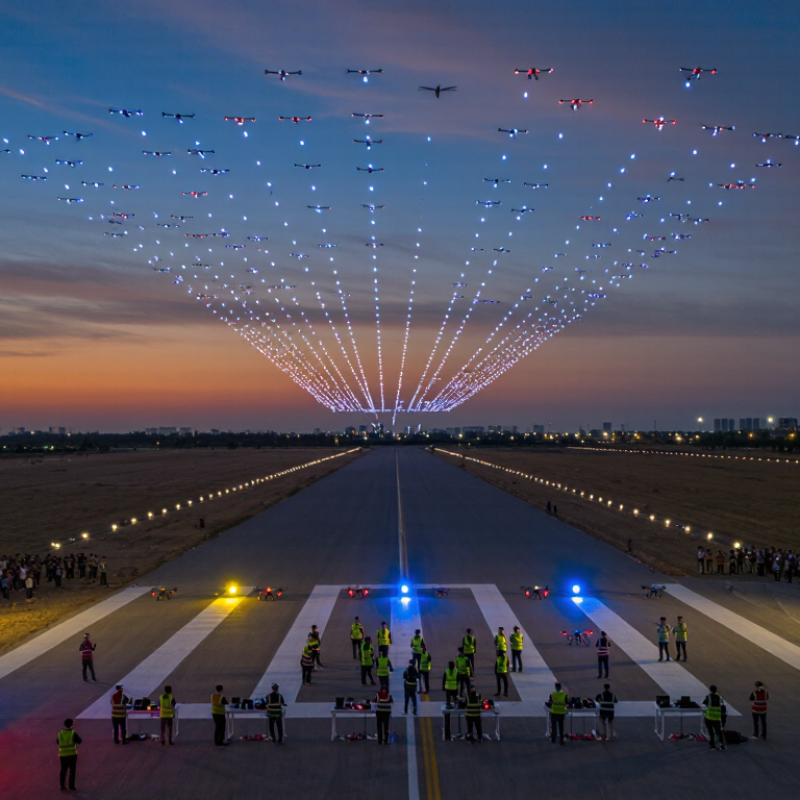
Planning a Drone Display Show in 2026 requires more than choosing attractive flight formations. It demands practical coordination between creative directors, certified pilots, engineers, venues, and local authorities. Grand View Research reported that the global commercial drone market reached approximately USD 30.6 billion in 2023. Its forecast also indicates strong growth through 2030. This expansion reflects rising demand for controlled, high-impact aerial experiences.

The numbers are encouraging. They are not a complete plan. A reliable show begins with a clear purpose, audience profile, venue survey, and realistic budget. Measure the launch area carefully. Mark spectator boundaries, emergency access routes, and recovery zones. Check wind conditions, nearby structures, lighting, and radio interference. The Federal Aviation Administration’s Aerospace Forecast 2024–2044 also highlights the continuing growth of unmanned aircraft operations. That growth increases the need for trained operators and disciplined risk management.

A strong 2026 plan should include site testing, aircraft inspections, weather thresholds, rehearsal flights, and a documented emergency response procedure. Insurance, permissions, privacy safeguards, and environmental considerations also deserve early attention. Some teams may focus too heavily on spectacle. That is a mistake. A bright dragon formation means little if the audience cannot see it clearly. Timing matters. Music, storytelling, brightness, and spacing must work together. The MarketsandMarkets Drone Services report projects rapid industry expansion through 2028, but forecasts can create false confidence. Conditions change quickly. Good planners leave room for technical delays, imperfect rehearsals, and honest review. Safety remains the most visible part of every successful show.

How to Plan a Drone Display Show in 2026?

Define the Purpose, Audience, and Creative Concept

How to Plan a Drone Display Show in 2026?

A successful drone display begins with a clear purpose, not impressive technology. Decide whether the show will celebrate a milestone, welcome visitors, support a public message, or create emotional impact. Your purpose should guide every creative choice, including music, colors, formations, and pacing.

Define the audience with practical detail. Families may prefer recognizable shapes and gentle transitions. A professional audience may value data-driven storytelling and precise visual symbolism. Consider viewing distance, age groups, cultural expectations, and accessibility needs. A concept can look brilliant on paper and feel empty in the sky. That is worth admitting early.

Tips: Write one sentence describing the desired audience reaction. Then remove any visual idea that does not support it. Test the concept with people outside your planning team. Their confusion may reveal a weak story.

4

Build the creative concept as a simple sequence, such as arrival, tension, transformation, and celebration. Use a small number of visual motifs, like stars, waves, or local architecture. Overcrowded scenes are difficult to read. Leave pauses between formations so the audience can absorb each image. Review the plan with qualified flight, safety, and event professionals before production. Confirm permissions, weather limits, emergency procedures, and viewing zones through the relevant authorities. Creative ambition matters, but reliable planning protects the audience and the meaning behind the show.

Check Regulations, Airspace Rules, and Safety Requirements

How to Plan a Drone Display Show in 2026?

Planning a drone display in 2026 starts with permission, not choreography. Regulations vary by country, region, and event location. Contact the national civil aviation authority before booking a venue. Check whether the show requires an operational permit, pilot certification, or temporary airspace approval. Ask about restricted zones near airports, hospitals, government buildings, and emergency routes. A permit alone may not cover every location. Confirm the rules in writing.

Airspace checks should continue throughout planning. Review official flight notices, temporary restrictions, and local weather warnings before every test flight. Speak with the landowner and local authorities about crowd control, noise, privacy, and public access. Prepare a site map showing launch areas, spectator boundaries, emergency exits, and safe landing zones. Keep spectators outside the required separation distance. Use trained pilots and a qualified safety manager. Test communication systems before the audience arrives.

Safety planning must include realistic failure scenarios. What happens if one aircraft loses connection? Where will it land if wind increases suddenly? Set clear abort procedures and pause the show when conditions change. Check batteries, lighting, software settings, and navigation performance before launch. Maintain suitable insurance and documented risk assessments. My early planning assumptions were often too optimistic. Small details, such as an unmarked service road, can change the entire risk picture. Leave time for a second review.

Design the Storyboard, Flight Patterns, and Visual Effects

Planning a drone display in 2026 starts with a clear visual story, not a collection of effects. Define the emotional arc before drawing flight paths. A simple three-act structure often works well: arrival, transformation, and final image. Sketch each scene on a timeline with duration, altitude, color, and formation size. Keep one visual idea per scene. This makes rehearsals easier and gives operators measurable targets. I prefer a storyboard with frame numbers and notes for wind, visibility, and audience sightlines. Small details matter. A low opening can feel intimate. A wide expansion can create scale.

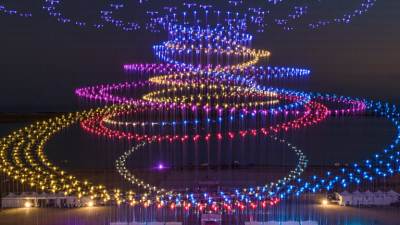
Flight patterns should support the story rather than compete with it. Use arcs for movement, grids for precision, and rotating rings for controlled energy. Leave generous spacing between units, especially during transitions. Each change needs a defined entry point, exit point, speed, and pause. Build the animation around the approved operating area and current local aviation requirements. A qualified flight team should review geofencing, emergency procedures, weather limits, and crowd separation. Never assume a computer simulation proves safety. Test the timing in daylight, then repeat it under expected evening conditions. Wind-exposed formations may need fewer drones or slower motion.

Visual effects become stronger when used selectively. A brief color pulse can mark a story beat better than constant flashing. Layer brightness changes, fades, trails, and shape morphs with restraint. Check how colors appear against haze and city light. Our first storyboard was too ambitious, and the finale looked crowded. We removed two transformations and gained clarity. That decision was disappointing, but useful. Leave time for manual review after every rehearsal. Watch from several audience positions, not only the control station. Record timing errors, uneven spacing, and moments when the image loses meaning. Some scenes will still need revision.

Select Drones, Software, Crew, and Technical Equipment

How to Plan a Drone Display Show in 2026?

Select Drones, Software, Crew, and Technical Equipment

A practical selection starts with the venue, not the animation. Measure the launch area, audience distance, wind exposure, and available recovery space. Choose drones with reliable positioning, visible lighting, replaceable batteries, and flight time suited to the show length. Identical aircraft simplify maintenance and formation control. Carry spare units. One failed drone can disrupt a sequence, even when the audience barely notices.

The software should support 3D formation design, collision avoidance, route simulation, battery tracking, and live status monitoring. Test every animation with realistic wind limits and battery performance. Keep an offline copy of the flight plan. A skilled flight director should lead the operation, supported by licensed pilots, a safety manager, a battery technician, and trained ground crew. Clear radio language matters. Confusion spreads quickly.

Technical equipment needs careful planning. Prepare charging stations, battery fire-resistant containers, weather instruments, backup control hardware, network links, lighting checks, and secure data storage. Use independent power supplies for critical systems when practical. Inspect each aircraft before every launch, then record faults instead of hiding them. That record builds accountability and improves future decisions. I would also schedule a full rehearsal at the actual site, although rehearsals often expose uncomfortable gaps in timing, visibility, or crew coordination. Confirm permissions, insurance, emergency procedures, and local operational requirements before transporting equipment.

How to Plan a Drone Display Show in 2026? - Select Drones, Software, Crew, and Technical Equipment

Planning Dimension Recommended Selection or Target Indicative Data for 2026 Planning Operational Purpose Key Requirements and Verification Points Status
Show objective Define the audience experience before selecting equipment 8–15 minutes; 8–20 programmed scenes; 1 clear narrative theme Creates a focused show with manageable flight and battery requirements Align the story, music, animation complexity, venue capacity, and approval documents before production begins Plan first
Fleet size Select the number of aircraft according to visual density and venue scale 100–300 drones for a medium public display; larger shows require additional spectrum, safety, and logistics planning Determines the apparent resolution and size of 2D or 3D formations Reserve 5–10% additional units as operational spares where budget and logistics allow Size carefully
Drone type Use purpose-built light-show drones rather than modified consumer aircraft Typical all-up mass: approximately 1–3 kg; integrated LED payload; automated formation flight Provides repeatable positioning, synchronized lighting, and predictable battery performance Confirm flight-control redundancy, return-to-home behavior, geofencing configuration, weather limits, and maintenance support Core asset
LED system Choose high-visibility, programmable RGB lighting with calibrated color output RGB color control; brightness and color calibration across the complete fleet Produces readable logos, symbols, text, gradients, and transitions from the audience viewpoint Test visibility at the actual viewing distance and account for ambient light, haze, camera exposure, and weather conditions Calibrate
Flight duration Build the show around the verified loaded-flight endurance, not the laboratory maximum Common planning range: 15–25 minutes per battery cycle; retain a safety reserve Allows time for takeoff, performance, landing, contingency actions, and controlled recovery Measure endurance with the actual light payload, temperature, wind, takeoff pattern, and flight profile Test required
Battery program Use inspected, balanced, traceable battery sets and approved charging equipment One labeled battery per aircraft plus charged spares; maintain a battery log by serial number and cycle count Reduces mid-show failures and prevents unsafe charging or battery rotation errors Separate charged, discharged, quarantined, and damaged batteries; never use swollen, punctured, overheated, or physically damaged packs Track every pack
Show-control software Use a platform that supports 3D choreography, fleet assignment, simulation, telemetry, and mission export Required functions: timeline editing, formation interpolation, collision checking, geofence import, replay, and audit logs Converts creative scenes into validated flight paths and synchronized lighting commands Maintain version-controlled show files and test the exact software, firmware, and configuration intended for the event Validate offline
Positioning system Use a positioning architecture suitable for dense multi-aircraft operations Target position accuracy: approximately 0.5–2 m during formation flight, subject to the selected system and environment Maintains spacing, shape quality, and separation between aircraft Survey satellite visibility, reflective structures, interference sources, local terrain, and backup positioning procedures Survey site
Radio communications Plan command, telemetry, and emergency communications as separate operational functions Use approved frequencies and power levels; maintain a documented link budget and interference plan Supports mission upload, launch authorization, health monitoring, and emergency response Coordinate spectrum use with the relevant authority; perform a site survey and a full-range communications test before the audience arrives Coordinate locally
Ground control Provide a dedicated control station with redundant power and protected communications Primary control computer, backup computer or configuration, two-way telemetry, UPS, and weather-protected operator position Gives the flight director real-time oversight of fleet health and mission state Use a written launch checklist, role-based access, secure show-file storage, time synchronization, and a manual abort procedure Redundancy preferred
Creative and technical crew Separate creative approval, flight command, maintenance, safety, and audience management responsibilities Minimum practical team for a medium show: flight director, remote pilot or operator, safety officer, technicians, visual designer, and event liaison Prevents one person from carrying incompatible operational responsibilities during critical phases Define authority to delay, cancel, abort, or land; brief every crew member using the same emergency plan Assign clearly
Technician coverage Staff technicians according to fleet size, battery workflow, and turnaround time Plan approximately 1 technician per 25–50 aircraft for staging, inspection, and troubleshooting Maintains launch readiness and accelerates fault isolation without overloading the flight team Increase staffing for difficult terrain, multiple launch pads, short setup windows, or long transport routes Scale with fleet
Launch and recovery area Use a controlled, access-restricted takeoff and landing zone Provide a clear pad with separation from spectators, structures, overhead wires, vehicles, and unauthorized personnel Reduces ground collision risk and protects staff during arming, takeoff, and recovery Mark pads visibly, control access, protect equipment from dust and moisture, and establish a sterile perimeter Secure area
Airspace design Define a three-dimensional operating volume and spectator exclusion zones Set maximum altitude, lateral boundaries, minimum separation, emergency landing areas, and no-fly sectors Limits exposure to people, buildings, aircraft, roads, and sensitive infrastructure Complete a site risk assessment and obtain any required aviation, land-use, event, or municipal permissions before public promotion Approval dependent
Safety management Use a documented risk assessment, emergency response plan, and go/no-go criteria Define thresholds for wind, precipitation, visibility, temperature, radio quality, battery condition, and unauthorized access Creates repeatable decisions instead of relying on last-minute judgment Include lost-link response, flyaway response, fire response, injury response, crowd incursion, and immediate landing procedures Mandatory
Weather monitoring Use a local weather source and on-site measurement equipment Monitor wind speed and gusts, precipitation, temperature, visibility, and lightning risk at regular intervals Protects aircraft stability, battery performance, lighting visibility, and public safety Use the aircraft manufacturer's operating limits and the stricter value from the risk assessment; do not fly in conditions outside approved limits Check continuously
Power and charging Provide stable, protected electrical power for batteries, control systems, lighting, and communications Size generators or mains capacity for peak charging load plus a practical reserve; use fire-resistant charging areas Prevents charging delays, voltage instability, overheating, and equipment downtime Use circuit protection, cable management, grounding, ventilation, fire extinguishers, and trained battery handlers Load-test
Transport and storage Use protective cases, inventory labels, and separated battery transport procedures Maintain an asset register covering aircraft, batteries, chargers, controllers, cables, tools, and spare parts Reduces setup errors, transit damage, and missing-equipment delays Protect batteries from short circuits, extreme temperatures, impact, and unauthorized access; follow applicable transport rules Inventory controlled
Rehearsal schedule Perform staged tests rather than relying on a single final rehearsal Recommended sequence: bench test, single-aircraft test, small-fleet test, full-fleet simulation, site rehearsal, show-day check Finds software, radio, positioning, choreography, and operational faults while correction time remains available Record test results, deviations, firmware versions, battery sets, weather, and corrective actions Use milestones
Audience and event integration Coordinate the show with venue operations, emergency services, security, music, lighting, and public announcements Establish one event contact and one operational communications channel for real-time decisions Prevents conflicts with pyrotechnics, helicopters, cranes, lasers, temporary structures, and crowd movement Synchronize the show clock, public messaging, access control, evacuation routes, and cancellation announcements Coordinate early
Post-show controls Complete controlled landing, disarm, inspection, data backup, and incident reporting Reconcile the aircraft and battery inventory before equipment leaves the site Closes the safety loop and preserves evidence for future improvement or regulatory review Log abnormal events, maintenance needs, damaged parts, battery condition, weather, audience feedback, and software changes Close out

Plan Rehearsals, Live Operations, and Post-Show Evaluation

How to Plan a Drone Display Show in 2026?

Plan Rehearsals, Live Operations, and Post-Show Evaluation

A reliable drone display begins with rehearsals that copy the real venue. Test launch positions, radio coverage, lighting, wind limits, and audience sightlines. Use approved airspace and confirm local aviation requirements before testing. A flight director should record every rehearsal result. Do not trust memory. Create a checklist for battery levels, navigation data, weather readings, and emergency landing zones. Run a partial rehearsal after sunset, then complete a full technical rehearsal with the actual music and lighting cues. Small timing errors often appear only under show conditions.

Tips: Keep one spare control unit ready. Mark landing areas clearly. Test emergency commands. Photograph the setup before departure.

During live operations, assign clear roles to the flight director, safety officer, technicians, and announcer. Only one person should issue flight commands. Monitor wind changes, telemetry, battery status, and nearby aircraft continuously. Pause the show when conditions exceed approved limits. That decision may disappoint the audience, but safety must remain measurable, not emotional. Keep a written incident log, even when nothing goes wrong.

After the show, gather the team within 24 hours. Compare planned timings with actual performance. Review flight logs, audience feedback, weather records, and technician notes. Identify repeated delays, unclear instructions, or unnecessary movements. Be honest about weak points. A perfect-looking show can still hide poor communication. Update the checklist and rehearsal plan while details remain fresh.

How to Plan a Drone Display Show in 2026?

Rehearsals, live operations, and post-show evaluation targets for a structured drone display plan.

The plan allocates time across four operational stages. Rehearsals focus on flight-path validation, geofencing, communications, and emergency procedures; live operations prioritize safety checks and coordinated execution; post-show evaluation measures reporting speed, issue closure, and operational improvement.