Leave Your Message

China Top 10 Laser Drone Show Manufacturers

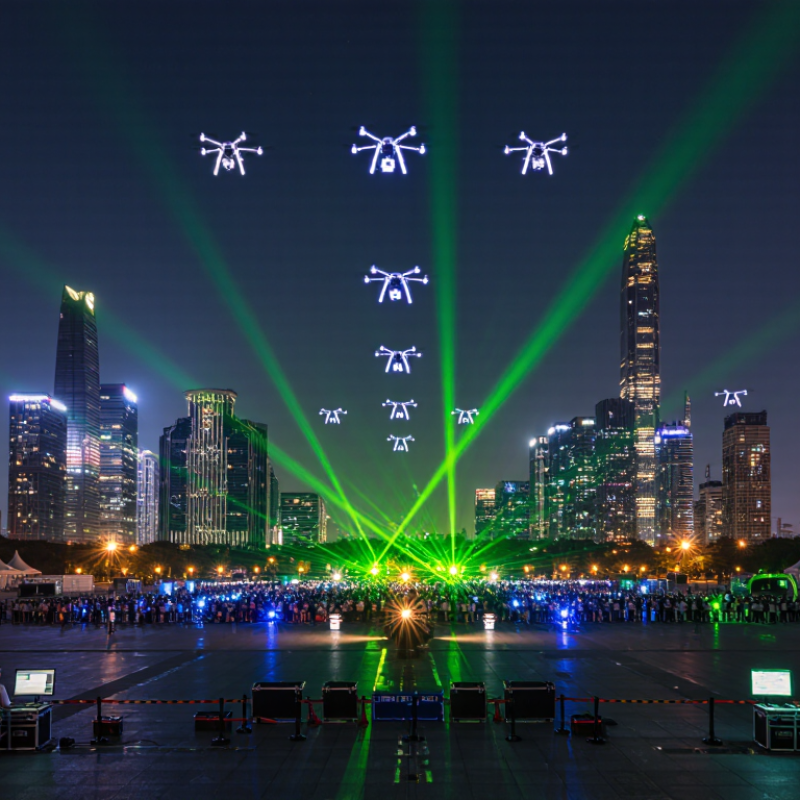
China has become a major production and innovation center for coordinated aerial entertainment. Its manufacturers combine drone platforms, flight-control software, lighting systems, and large-scale event services. This article examines China’s top 10 Laser Drone Show manufacturers through a practical industry lens.

The market context is substantial. Grand View Research valued the global commercial drone market at approximately USD 30.6 billion in 2022. It also forecast a 13.9% compound annual growth rate from 2023 to 2030. Drone Industry Insights’ Drone Market Report 2024 further highlights expanding commercial applications, including entertainment, advertising, and public events. These figures do not measure drone shows alone. They still indicate strong demand for reliable aerial systems.

Performance must be judged beyond spectacular footage. A professional supplier should demonstrate stable formation control, accurate positioning, battery management, weather resistance, and safe command redundancy. Laser systems require additional attention to beam control, aircraft separation, audience protection, and local aviation approval. CAAC regulations and regional event requirements should guide every deployment in China and overseas. Look for documented flight experience. Ask for testing records. Request clear maintenance procedures.

This ranking should not be treated as an absolute industry verdict. Manufacturer capabilities can change quickly, and public information is sometimes incomplete. That weakness matters. Therefore, the selection considers engineering depth, fleet scale, software maturity, service coverage, certifications, project experience, and customer support. A dazzling performance is valuable, but dependable execution matters more when hundreds of aircraft fill the night sky.
China Top 10 Laser Drone Show Manufacturers

Definition and Role of Laser Drone Shows in Modern Events

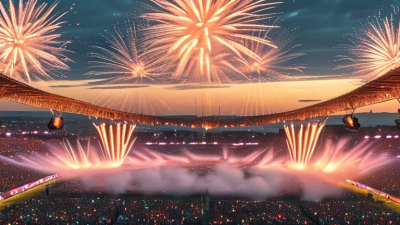
Laser drone shows combine coordinated unmanned aircraft, programmable light sources, and sometimes ground-based lasers to create aerial visuals. Unlike ordinary fireworks, the display can form changing logos, animals, patterns, and three-dimensional illusions above an event space. The term is not perfectly standardized. Some suppliers describe LED drone formations as laser shows, so buyers should verify the lighting equipment and technical scope.

In modern events, these shows support storytelling rather than simple decoration. A formation can reveal a product shape, mark a cultural celebration, or guide attention during a stadium performance. Experienced production teams plan flight paths, brightness, timing, and audience sightlines together. They also review weather, battery limits, launch zones, crowd separation, and local aviation requirements before operation. Small errors matter. A single delayed aircraft can weaken a carefully designed image.

China’s leading manufacturers often combine aircraft engineering, animation software, lighting control, and event services. Reliable providers should offer documented testing, trained operators, maintenance records, and a clear emergency procedure. Buyers should request previous project evidence and confirm whether the quoted service includes permits, rehearsals, insurance, and on-site supervision. Visual ambition is useful, but practical limits remain. Wind changes quickly, and an impressive simulation may not perform equally well outdoors.
Key Technologies Used by Laser Drone Show Manufacturers

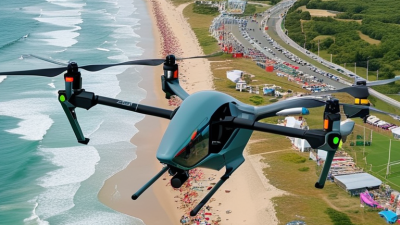
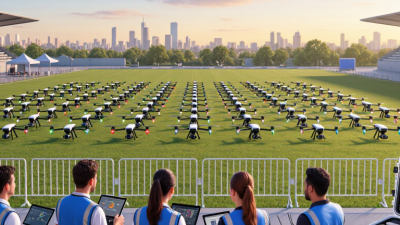
Laser drone show manufacturers now combine compact RGB lasers, high-speed beam steering, and synchronized flight control. Goldman Sachs Research projected the global drone market could reach 100 billion dollars by 2030. Commercial applications represented about 13 billion dollars of that estimate. This growth supports stronger demand for accurate positioning and safer fleet management.

RTK-GNSS helps drones hold formation within centimeters in open areas. In crowded venues, inertial sensors and optical flow provide backup. LiDAR can map trees, buildings, and temporary structures before takeoff. Grand View Research valued the global LiDAR market at approximately 1.7 billion dollars in 2022. Its reported growth outlook suggests wider adoption in automated spatial mapping. Laser brightness also matters. Engineers must balance visibility, battery load, heat, and eye-safety controls. The balance is not always perfect. Wind, haze, and reflective surfaces can still distort a beautiful design.

Tips: Ask manufacturers for a full rehearsal, geofencing records, emergency landing logic, and weather limits. Request measured brightness data, not only promotional images. Use independent safety reviews when possible. A practical test should include signal loss, one-drone failure, and sudden wind. Even reliable software can behave differently above water or between tall buildings. The operator’s experience remains important, especially when the audience is large.

Selection Criteria for the Top 10 Manufacturers in China

China Top 10 Laser Drone Show Manufacturers

Selection Criteria for the Top 10 Manufacturers in China

Selecting the top ten manufacturers requires more than comparing drone numbers. A reliable evaluation examines flight experience, laser engineering, software control, and documented project results. Teams should show real footage, technical drawings, and clear explanations of their testing process. Vague claims are not enough.

Safety carries the greatest weight. Evaluators should check geofencing, emergency landing procedures, battery monitoring, and communication redundancy. Laser systems also need controlled output, accurate beam direction, and professional risk assessments. Operators should understand local aviation rules and event-site requirements. They must provide trained staff, maintenance plans, and weather cancellation procedures. Small details matter.

Technical quality matters too. Look for stable formations, smooth transitions, accurate timing, and consistent brightness across large venues. Strong manufacturers usually offer simulation software, rehearsal support, and responsive engineering teams. Customer references can reveal more than polished presentations. Ask about delays, repairs, and post-event support. Honest answers are valuable.

Cost should be judged against reliability, not used alone. A cheaper proposal may exclude safety staff, backup equipment, or venue testing. That weakness can appear late. No scoring model is perfect. My assessment would combine site visits, independent documentation, client feedback, and live demonstrations. Some suppliers may perform well technically but lack international communication experience. Others may have impressive shows yet limited after-sales capacity. These gaps deserve careful consideration before inclusion in a top-ten list.

China Top 10 Laser Drone Show Manufacturers - Selection Criteria for the Top 10 Manufacturers in China

Evidence-based evaluation framework for comparing laser and laser-drone-show equipment manufacturers

No. Selection Dimension Suggested Weight Objective Evaluation Indicators Required Evidence Relevant Standards or References
1 Laser Safety Compliance 18% Risk classification, beam-control design, emergency shutdown, key-switch control, scanning safeguards, aperture protection, and operator safety procedures. Product safety test reports, risk assessments, user manuals, emergency-stop test records, and documented operating procedures. IEC 60825-1 GB 7247.1
2 Optical Output and Color Performance 14% Measured optical power, RGB color mixing, beam divergence, scanning angle, modulation response, color consistency, and visible-effect performance. Independent or calibrated measurement reports, optical specifications, production inspection records, and sample acceptance-test results. Calibrated power meter Photometric testing
3 Show-Control and Software Capability 12% Timeline programming, synchronization, DMX or Art-Net support, timecode compatibility, network redundancy, content import, and offline rehearsal functions. Software demonstration, protocol documentation, synchronization test results, system architecture, and customer acceptance records. DMX512 Art-Net SMPTE timecode
4 Drone-System Integration 12% Payload compatibility, take-off and landing workflow, weight distribution, battery impact, positioning accuracy, communication reliability, and synchronization with aerial formations. Payload-interface drawings, flight-test records, integration procedures, system compatibility lists, and documented operating limits. Payload test GNSS/RTK verification Flight risk assessment
5 Reliability and Environmental Durability 10% Continuous operating time, thermal management, vibration resistance, dust and water protection, outdoor stability, fault rate, and service life of optical modules. Burn-in records, environmental test reports, enclosure ratings, failure-rate data, maintenance schedules, and warranty statistics. IEC 60529 Thermal testing Vibration testing
6 Manufacturing and Quality Management 10% Incoming inspection, optical alignment, calibration control, traceability, production consistency, final inspection, corrective-action processes, and quality-system maturity. Factory audit results, quality manuals, inspection plans, calibration certificates, batch records, and corrective-action reports. ISO 9001 Traceability records
7 Electromagnetic Compatibility and Electrical Safety 8% Power protection, grounding, insulation, electromagnetic emissions, immunity, connector safety, and compatibility with venue power systems. EMC test reports, electrical schematics, insulation-test results, grounding instructions, and power-quality requirements. IEC 61000 series GB/T 17626 series
8 Project Delivery and Technical Support 6% Engineering response time, installation assistance, commissioning, operator training, spare-parts availability, remote support, and on-site service coverage. Service-level agreements, training materials, support records, spare-parts lists, project schedules, and commissioning reports. SLA documentation Training records
9 Customization and Content Production 5% Ability to adapt enclosure design, mounting systems, control interfaces, animation content, venue geometry, weather conditions, and event-specific requirements. Technical design samples, customized drawings, content portfolios without confidential client data, revision records, and acceptance criteria. CAD documentation Content test files
10 Commercial Transparency and Total Cost of Ownership 5% Equipment price, software fees, installation costs, consumables, energy use, maintenance requirements, warranty coverage, replacement-part costs, and expected operating life. Itemized quotations, warranty terms, maintenance schedules, spare-parts pricing, energy specifications, and lifecycle-cost calculations. TCO analysis Warranty documentation
Recommended scoring method: Score each dimension from 0 to 10 using documented evidence, multiply the score by the suggested weight, and rank manufacturers by the weighted total. Safety compliance and regulatory approval should be treated as mandatory qualification requirements rather than optional scoring advantages.

Profiles of China’s Top 10 Laser Drone Show Manufacturers

China’s top 10 laser drone show manufacturers are best compared through engineering depth, not visual spectacle alone. Each profile should examine fleet size, positioning accuracy, laser integration, software stability, and post-show support. China’s Civil Aviation Administration reported more than 1.26 million registered civil drones in 2023, with over 23 million operational flight hours. That scale reflects strong manufacturing experience, but it does not guarantee show quality.

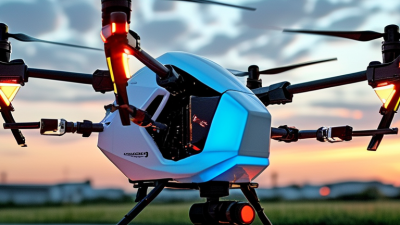
The leading manufacturers typically combine lightweight airframes with high-brightness lighting modules and redundant communication links. Reliable systems often use RTK positioning, geofencing, automated formation checks, and battery monitoring. These details matter when hundreds of aircraft create moving patterns above a city skyline. The Fortune Business Insights Drone Market report projects continued global expansion through 2030, supporting demand for larger fleets and more efficient platforms. Yet market forecasts can overstate real-world readiness.

Several Chinese manufacturers focus on rapid deployment, custom formations, and software control. Others emphasize endurance, weather resistance, or modular payloads. A careful profile should record tested flight duration, maintenance intervals, maximum operating wind, and recovery procedures. Marketing claims are not enough. One overlooked weakness is rehearsal data: some providers show impressive animations but offer limited evidence from repeated outdoor performances. Buyers should request flight logs, safety documentation, and independent performance records before selecting a supplier.

Industry Trends and Applications of Laser Drone Shows in China

China Top 10 Laser Drone Show Manufacturers

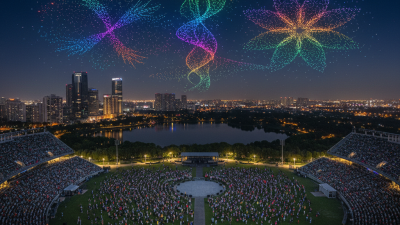
China’s laser drone show industry is moving from simple formation flights toward immersive public storytelling. Fleets now combine colorful lighting, precise positioning, and low-power laser effects. Tourism boards use these displays above waterfronts, historic districts, and seasonal festivals. Cultural events can recreate animals, symbols, or moving landscapes in the night sky. The strongest productions usually begin with a clear story, not complicated technology.

Recent industry trends include reusable flight plans, improved battery management, and centralized monitoring systems. Operators increasingly test wind limits, visibility, crowd distance, and local airspace requirements before each performance. Indoor demonstrations are also growing in controlled venues, although outdoor shows remain more visually powerful. Practical experience shows that weather can change a polished plan quickly. A beautiful animation may still fail under heavy wind or haze.

Tips: Choose a manufacturer with documented flight procedures and trained technical staff. Request evidence of safety testing, maintenance records, and previous event experience. Confirm permissions early, especially near airports, dense neighborhoods, or protected landmarks. Keep laser brightness appropriate for the venue and audience. Do not assume more drones create a better show. A smaller, well-timed fleet often looks clearer and feels safer. Even experienced teams should review emergency landing plans before every launch.