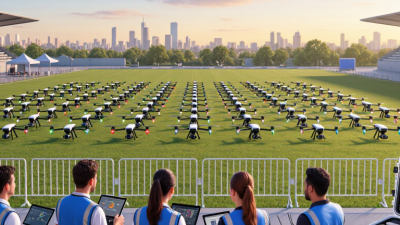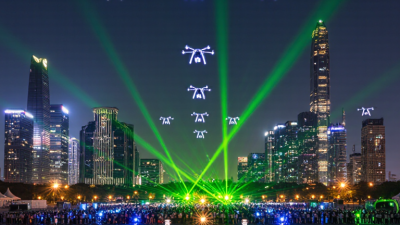
Choosing the right Drone Show Drones is not simply a matter of counting units. It is a production decision involving flight time, brightness, software, safety, and support.
Grand View Research reported that the global commercial drone market reached approximately USD 30.75 billion in 2023. Its outlook also indicates strong growth through 2030. However, commercial growth does not guarantee show-ready performance. A drone built for inspection may not deliver the precise positioning required for a synchronized night display. Battery capacity, GNSS stability, LED visibility, wind resistance, and fleet-control latency deserve practical testing.
Small details matter.
A weak navigation signal can create visible gaps between formations. A short battery cycle can force costly pauses. Operators should request documented flight-test results, maintenance procedures, spare-parts availability, and realistic operating limits. The supplier’s training program also matters, especially when a show involves hundreds of aircraft, changing weather, and large audiences.
Anil Nanduri, Intel’s former vice president and general manager of drones, captured the industry’s direction with the phrase, “Drones are the new fireworks.” That comparison is memorable, but incomplete. Fireworks create one brief spectacle; Drone Show Drones depend on repeatable software, disciplined crews, and measurable reliability. This guide examines ten practical buying considerations, from fleet architecture and payload brightness to regulatory planning and after-sales service. Some recommendations may seem obvious. They are still easy to overlook when a supplier’s demo looks perfect. A polished demonstration is evidence, not proof.
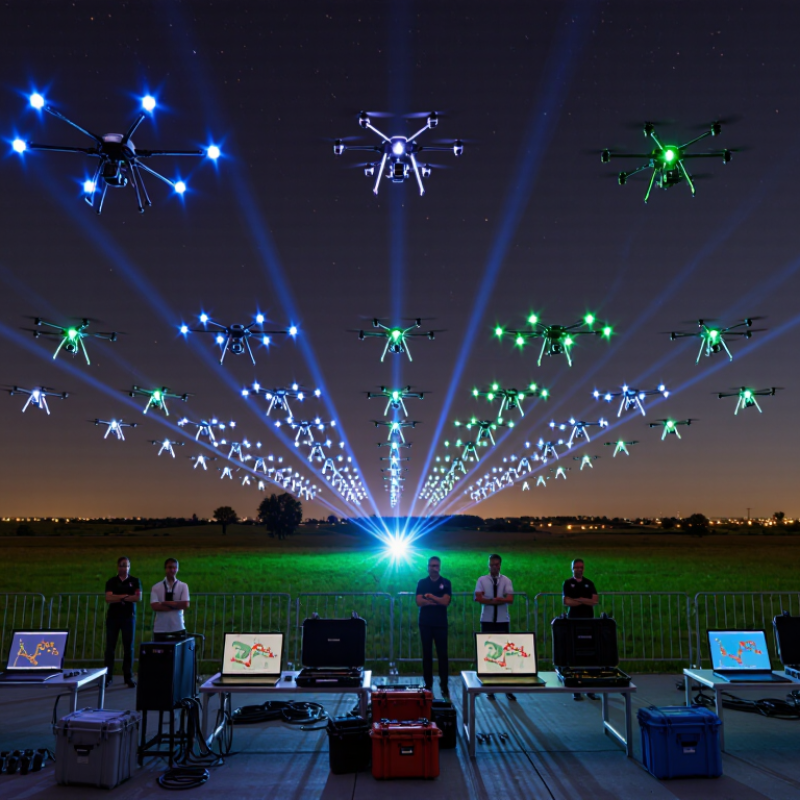
Define the Performance Requirements for a Drone Show
Before buying drone show aircraft, define the scene, not the shopping list. Measure audience distance, flight duration, formation density, brightness, wind tolerance, and recovery time. The FAA’s 2024 Aerospace Forecast projects the U.S. commercial small-UAS fleet to exceed 500,000 aircraft by 2028. That growth increases equipment choice, but not every platform suits synchronized entertainment.
Tip: Write measurable targets.
A practical specification might require 300 drones, 12 minutes of flight time, visible formations at 800 meters, and safe operation in moderate wind. Include takeoff spacing, navigation accuracy, battery-swapping time, and emergency landing behavior. EASA’s Annual Safety Review emphasizes that operational risk depends on the complete system, including procedures, people, and equipment. One impressive aircraft cannot fix weak planning. Small errors multiply.
Tip: Test the weakest condition.
Request flight logs, battery-cycle records, positioning accuracy, and independent safety documentation. Ask for performance data at the intended temperature and wind range, not only laboratory conditions. Drone Industry Insights’ 2024 market analysis identifies reliability and regulation as continuing barriers to commercial drone adoption. That matters during shows, where one missing unit can distort a recognizable shape.
I would also budget spare aircraft, batteries, propellers, and charging capacity. The exact reserve depends on fleet size and local conditions. A spreadsheet may still miss real weather. Conduct a pilot test with the planned music, launch layout, lighting level, and control workflow before making the final purchase.

When buying drone show drones, safety should guide every technical decision. Check obstacle sensing, emergency landing logic, and battery-temperature monitoring. Ask whether the system records faults and flight histories. Clear diagnostic logs help technicians find repeated problems before a performance. Test the return-to-home function in an open, controlled area. Watch the landing path, not only the takeoff.
Reliability depends on more than advertised flight time. Inspect battery cycle data, motor quality, weather tolerance, and frame durability. A dependable drone should maintain stable positioning during moderate wind. It should also report weak signals before control becomes uncertain. Request maintenance intervals and replacement procedures in writing. Small delays during repairs can affect an entire show. I would inspect spare parts, too, because this detail is easy to overlook.
Flight-control features deserve practical testing. Look for encrypted communication, adjustable safety boundaries, collision prevention, and synchronized route updates. The control station should show each aircraft’s position, battery level, signal strength, and warnings clearly. Run a simulated formation test before any outdoor flight. Then repeat it with partial signal loss. Some systems appear smooth in demonstrations but respond slowly under pressure. That weakness needs honest attention. Choose equipment with documented testing, trained support, and software updates that do not disrupt established flight plans.
Compare battery endurance under real show conditions, not laboratory claims. Bright LEDs, wind, and repeated takeoffs reduce flight time.
Check battery cycle life and charging speed. A quick battery swap can protect your event schedule.
Ask whether batteries include temperature monitoring and safe storage guidance. Small details matter.
Test the drone fully loaded. A payload rating means little if performance drops sharply near its limit.
Measure payload capacity against the lighting system, wiring, and protective housing. Leave a practical safety margin.
Inspect how securely the payload attaches during turns and braking. Loose equipment creates unnecessary risk.
Compare lighting brightness from multiple viewing distances. A light that looks powerful indoors may disappear outdoors.
Evaluate color accuracy, brightness consistency, and visibility in mild haze. I once underestimated haze during an evening test, and the display looked flatter than expected.
Review positioning accuracy and synchronization performance. Lighting effects depend on every aircraft holding its place.
Request flight logs, maintenance records, and demonstrations in realistic wind. Reliable suppliers should explain limitations clearly, not only highlight specifications.
Also examine noise, operating temperature, and software recovery procedures. These factors can affect audience comfort and show continuity.
Do not choose the highest payload or brightest lights automatically. Balanced performance usually creates a more dependable display.
My own testing would include a full rehearsal, because impressive specifications can still disappoint in practice.
Tip 1: Check fleet compatibility before comparing prices. Drones should share communication standards, battery formats, positioning systems, and charging requirements. During fleet evaluations, place several units on the same test bench. Watch for delayed responses, uneven battery readings, or inconsistent flight behavior. Small differences become expensive across a large fleet.
Tip 2: Examine the software support in practical conditions. Ask whether the control platform supports your planned fleet size, show design workflow, telemetry, and emergency procedures. Request a live demonstration, not only a polished presentation. Test firmware updates on a small group first. Software failures can interrupt rehearsals, even when the hardware appears reliable. Keep offline operating procedures available. That detail is often overlooked.
Tip 3: Calculate maintenance needs before purchase. Review motor replacement intervals, battery storage rules, propeller inspection methods, and spare-part availability. A good supplier should provide clear manuals, training, and documented service response times. Record each drone’s flight hours and repair history. This creates evidence for safer decisions and more predictable budgets. I would also inspect a sample unit after repeated flights. Advertised durability is useful, but workshop evidence is better. Some buyers, including experienced teams, underestimate cleaning and connector checks. That mistake can shorten equipment life.
10 Tips for Buying Drone Show Drones?
Calculate Total Costs, Legal Requirements, and Supplier Services
Buying drone show drones requires more than comparing airframe prices. Start by calculating total ownership costs, not just the quotation. Include batteries, chargers, flight-control software, transport cases, spare parts, insurance, training, and maintenance. A realistic budget should reserve money for replacements after hard landings. Ask for a five-year cost estimate with labor included. Small fees accumulate quickly. I once saw a promising budget fail because storage and battery replacement were ignored. That is the uncomfortable part.
Verify aviation authority rules, pilot qualifications, operating permissions, privacy limits, frequency requirements, and event safety procedures. Requirements vary by location and venue. Request current compliance documents, operating manuals, insurance evidence, and emergency procedures. Do not assume a supplier’s approval covers your event. Confirm whether local permissions are needed for testing, public performances, or night operations. Weather restrictions also deserve attention. Legal details can change.
Evaluate supplier services beyond the sales meeting. Check training quality, software updates, technical support, spare inventory, warranty exclusions, and on-site assistance. Request a live demonstration and references from comparable projects. Ask how quickly replacement units can arrive. Require clear response times for technical failures. A cheap package may hide weak support. Transparent limits are better than confident promises, although they can increase initial costs. Leave room for mistakes. Good planning is not perfect planning.
| No. | Buying Tip | What to Evaluate | Typical Planning Data | Cost or Compliance Impact | Supplier Questions |
|---|---|---|---|---|---|
| 1 | Define the show size | Confirm the number of aircraft, flight area, viewing distance, animation complexity, and expected show duration. | Small shows may use approximately 50–150 drones; larger outdoor productions can require several hundred or more. | The drone count affects aircraft purchases, batteries, charging capacity, transport, staffing, spares, and regulatory planning. | What is the maximum supported fleet size, and can the system scale without replacing the control infrastructure? |
| 2 | Calculate the total cost of ownership | Include aircraft, batteries, chargers, control equipment, software, shipping, customs, insurance, labor, maintenance, and replacement units. | A planning model should include approximately 5%–10% spare aircraft and additional batteries for operational resilience. | The purchase price alone can materially understate the first-year budget; recurring software, battery, inspection, and training costs must be separated. | Can you provide a five-year cost schedule with shipping, taxes, software, service, spare parts, and warranty exclusions? |
| 3 | Verify flight endurance | Check claimed flight time under the intended payload, temperature, wind, battery age, and safety reserve. | Many show-planning scenarios target roughly 10–20 minutes of usable flight time, with a reserve rather than a full battery discharge. | Shorter practical endurance increases battery rotation, charging stations, turnaround time, and the number of batteries required per show. | What test conditions produced the flight-time rating, and what reserve does the operating manual require? |
| 4 | Check positioning accuracy and redundancy | Assess navigation accuracy, geofencing, return or landing behavior, lost-link response, obstacle considerations, and emergency shutdown procedures. | Ask for documented performance under open-sky conditions and for the minimum safe separation between aircraft and spectators. | Reliable positioning and fail-safe behavior reduce aborted shows, recovery costs, and operational risk but may require additional control equipment. | How does the system respond to GNSS interference, communication loss, low battery, or an aircraft entering a restricted zone? |
| 5 | Confirm lighting and payload capability | Evaluate brightness, color range, visibility, synchronization, weather tolerance, and whether the lighting module is integrated or replaceable. | The visual result depends on ambient light, viewing distance, haze, aircraft spacing, LED output, and animation design—not only LED quantity. | Higher lighting power can increase energy use and reduce flight endurance; replaceable modules may lower long-term repair costs. | What brightness tests, color specifications, ingress protection rating, and replacement procedures are documented? |
| 6 | Review local legal requirements | Identify aircraft registration, operator qualification, airspace authorization, remote-identification rules, privacy obligations, and event permits. | Requirements vary by country and may differ for private property, public events, controlled airspace, night operations, and flights near people. | Approval timelines can affect the launch date; permit fees, aviation consultants, risk assessments, and compliance staff should be budgeted separately. | Which compliance documents are supplied, and who is responsible for applications, operational manuals, and regulator communication? |
| 7 | Assess weather operating limits | Check wind, rain, temperature, visibility, electromagnetic interference, and battery operating limits. | A show plan should define measurable go/no-go thresholds and a cancellation process based on the aircraft manual and local safety assessment. | Weather cancellations can create venue, labor, transport, and refund costs; postponement and insurance terms should be reviewed in advance. | What environmental limits are validated, and what support is available for weather monitoring and emergency rescheduling? |
| 8 | Compare battery and charging systems | Review battery chemistry, cycle-life testing, storage voltage, charging speed, thermal monitoring, transport rules, and end-of-life procedures. | Lithium batteries generally require controlled charging, protected storage, inspection, and transport in accordance with applicable dangerous-goods rules. | Battery replacement is a recurring cost; charging infrastructure may require dedicated power, distribution protection, and trained personnel. | What battery cycle data, charger safety certifications, storage guidance, and recycling arrangements are included? |
| 9 | Evaluate software and content workflow | Check animation tools, 3D preview, collision and boundary checks, music synchronization, file ownership, export formats, and operator permissions. | Plan time for site surveying, formation design, simulation, rehearsal, safety review, and final approval before the event. | Subscription fees, content production, updates, training, and custom animation revisions can become significant recurring expenses. | Are software licenses perpetual or subscription-based, and can the buyer export project files if the service agreement ends? |
| 10 | Verify supplier services and after-sales support | Review warranty duration, repair turnaround, spare-part availability, remote support, on-site commissioning, training, documentation, and service-level commitments. | Maintain an asset register for aircraft, batteries, chargers, firmware, inspections, incidents, and repairs throughout the fleet lifecycle. | A lower purchase price may be outweighed by long repair times, unavailable parts, limited training, or unclear warranty exclusions. | What response time, replacement policy, technician training, firmware support period, and local service capacity are contractually guaranteed? |
Planning note: Costs, operating limits, and legal obligations vary by aircraft configuration, location, event type, and aviation authority. Confirm all requirements with the applicable regulator and obtain written technical specifications before purchase.