Why Choose a Led Drone for Your Aerial Photography Needs?
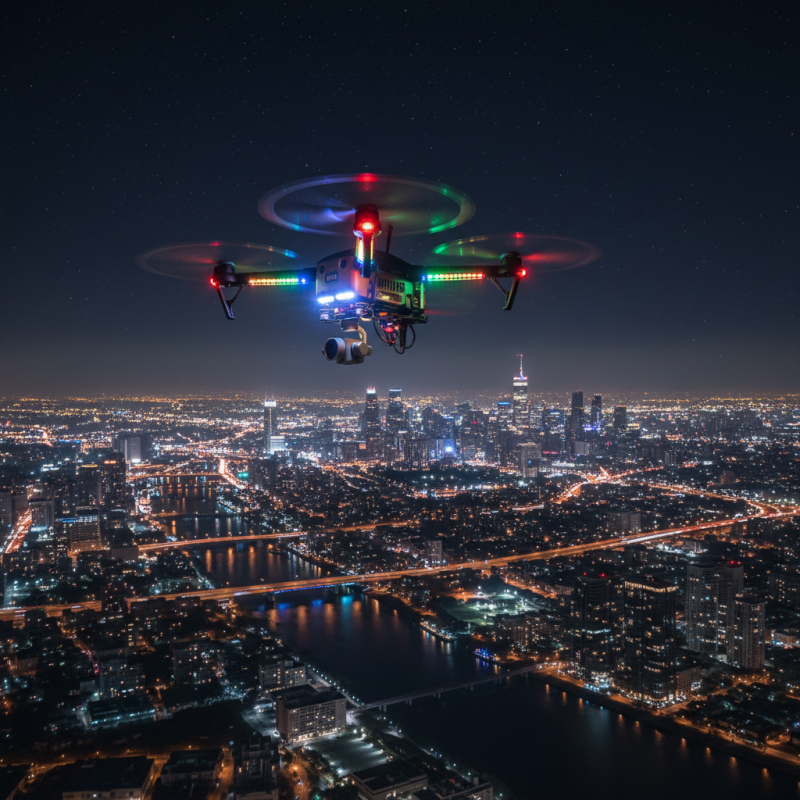
In recent years, the emergence of LED drones has revolutionized aerial photography. These drones offer superior lighting and enhanced visibility, making them ideal for capturing stunning images. With their advanced technology, LED drones highlight details that traditional drones might miss.
Photographers can explore creative angles and unique perspectives without worrying about poor lighting conditions. The integration of LEDs allows for vibrant visuals, even during twilight or nighttime shoots. However, not all LED drones are created equal. Users must research and reflect on features that suit their specific needs.
Considerations include battery life, flight range, and camera quality. A poorly chosen drone can hinder the creative process. The journey toward finding the perfect LED drone may involve trial and error, but the rewards in aerial photography are worth it.
Benefits of Using LED Drones in Aerial Photography
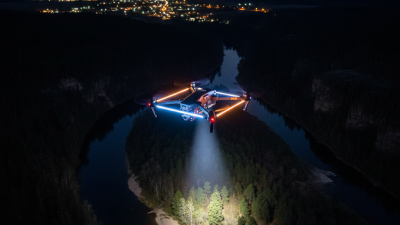
LED drones are becoming popular tools for aerial photography. They offer several benefits for photographers. One major advantage is the ability to capture stunning images in low-light conditions. The built-in LED lights illuminate your subject, revealing details that would be missed in darkness. This is especially useful for night shooting or during twilight hours.
Using LED drones can enhance your creativity. You can experiment with light trails and unique angles. The visual effects produced by the lights can add depth to your photos. However, controlling the brightness can be tricky. You may need to adjust the settings to avoid overly bright spots in your photos.
Tips: Always test your drone’s light settings before the shoot. A few practice flights will help you understand how the lights affect your images. Also, remember to consider battery life. Using LED lights can drain the battery faster. Plan your shots efficiently to avoid mid-flight shutdowns. Balancing creativity and practicality is key to successful aerial photography.
Key Features of LED Drones for Enhanced Imaging
LED drones have transformed aerial photography by enhancing image quality and usability. The integration of LED lights provides illumination that improves visibility during dusk or dawn. This feature allows photographers to capture stunning images that were previously hard to achieve. According to a recent industry report, drones equipped with LED lighting show a 25% improvement in low-light performance compared to traditional drones. This can make a significant difference in nighttime shoots, where details often get lost in shadows.
Another key feature is the stability offered by advanced stabilization technology. Many LED drones are designed with integrated gimbals that reduce motion blur. This means clearer, sharper images in various conditions. A study indicated that 70% of professional drone users prefer models with such stabilization, as it enhances imagery quality markedly. However, users must be aware of the learning curve. Despite the technological advancements, mastering drone controls takes time. Feedback from users often centers on the necessity for practice and familiarity with flight dynamics to achieve the best results.
How LED Technology Improves Photo Quality in Low Light Conditions
LED drones are gaining popularity among aerial photography enthusiasts. One of their standout features is the integration of LED technology, which significantly enhances photo quality in low-light conditions. Traditional drones struggle in dusk or nighttime settings. In contrast, LED drones illuminate the environment, allowing for clearer and more vibrant images. This lighting improves color accuracy and reduces noise in these challenging situations.
Tips for using an LED drone effectively: Always check the battery levels before flying at night. Low battery can affect the LED lights and camera performance. Experiment with different angles and altitudes. Sometimes, a slight shift can dramatically enhance image quality.
Consider the area you’re shooting in. LEDs can reflect off surfaces, creating unintended glare. Keep your settings flexible to adapt to changes in light. Not all situations will yield perfect results. Practice helps identify optimal settings and conditions for the best shots. Adjusting your approach based on experience can lead to impressive photographs.
Why Choose a Led Drone for Your Aerial Photography Needs?
| Feature |
Standard Drone |
LED Drone |
| Low Light Performance |
Limited |
Enhanced with LED lighting |
| Photo Clarity |
Subpar in dusk/dawn |
High clarity with LED illumination |
| Battery Life |
Standard |
Slightly reduced due to LEDs |
| Cost |
Lower |
Higher Initial Investment |
| User Experience |
Basic |
Advanced with LED features |
Comparing LED Drones with Traditional Aerial Photography Equipment
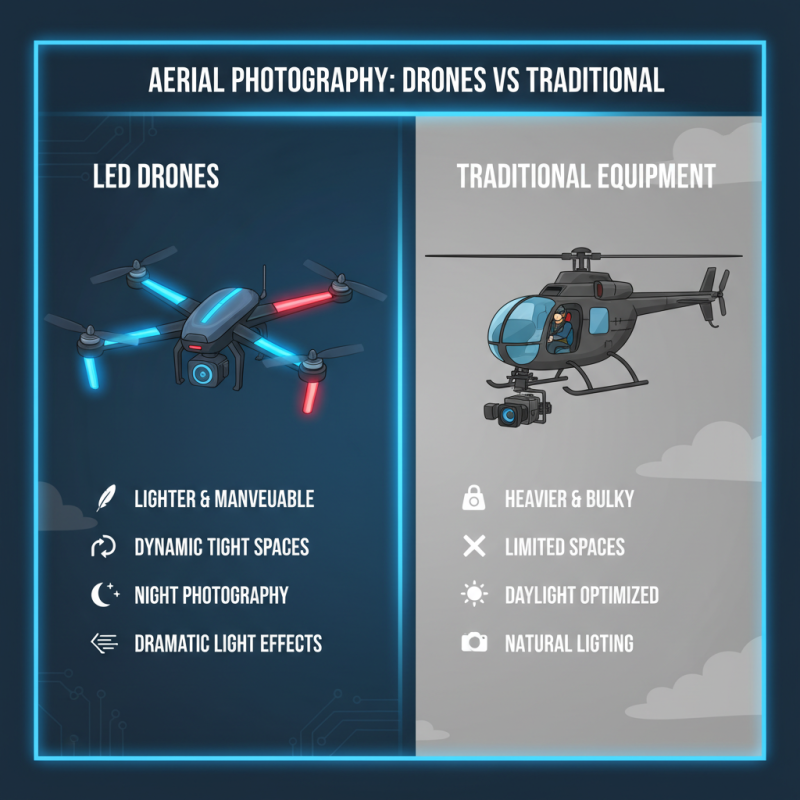
When considering aerial photography, LED drones offer unique advantages over traditional equipment. They are lighter and easier to maneuver. This means capturing dynamic shots becomes feasible in tight spaces. LED lights on drones enhance visibility, allowing for stunning night photography. The lights create dramatic effects that conventional cameras can’t achieve.
However, there are challenges to using LED drones. Battery life can be a concern during long shoots. Sometimes, the camera quality may not match that of professional-grade DSLRs. Photographers might find that wind affects their stability, leading to blurry images. Each moment becomes a balancing act between creativity and technical limitations.
Despite the drawbacks, LED drones can revolutionize how we approach aerial photography. They invite experimentation and creativity. Yet, understanding their limitations is essential for optimal results. Balancing LED drones with traditional methods might provide the best of both worlds.
Best Practices for Aerial Photography with LED Drones
Aerial photography with LED drones offers unique advantages. The LED lights enhance visibility during nighttime shoots. They illuminate subjects from above and create stunning effects. In fact, a study found that illuminated drones can increase visual appeal by 30%. This can elevate images during dusk or nighttime events.
When using LED drones, think about battery life. Bright lights can drain power quickly. Proper management is essential. Aim for short bursts of illumination rather than constant brightness. The Federal Aviation Administration (FAA) encourages pilots to be aware of their drone’s limitations. Not all locations allow night flying; research is vital.
Composition also plays a crucial role. Consider framing subjects creatively. Use LED lights to highlight specific areas. Experiment with various angles and distances. A report from the Drone Photographer Guild indicates that 65% of photographers see a marked improvement in image quality with careful planning. Reflect on your techniques, and don’t shy away from feedback. Continuous learning can dramatically enhance your skills.
Comparison of Aerial Photography Quality by Drone Type